
Fast Delivery And Low MOQ With Money Back Guarantee...
Fast Delivery And Low MOQ With Money Back Guarantee...

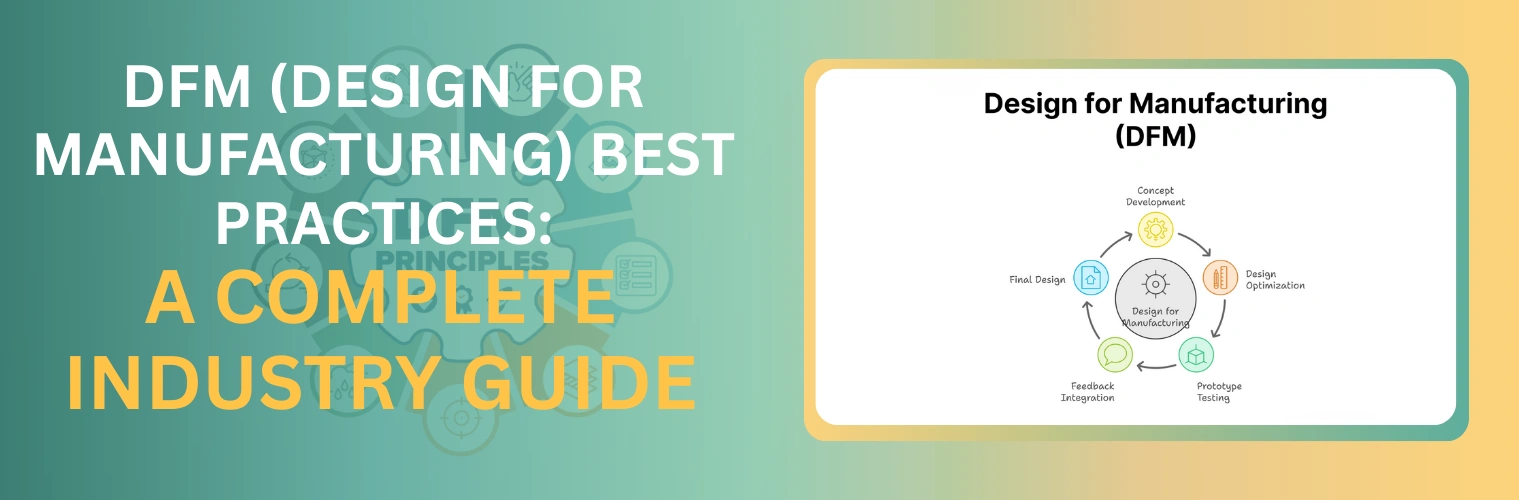
Design for Manufacturing, commonly known as DFM, is one of the most critical steps in product development. It ensures that a product is not only functional but also easy, economical, and efficient to manufacture. When applied early, DFM helps reduce unnecessary complexity, speed up manufacturing, and cut overall costs significantly.
Most engineering teams use DFM to identify design issues before tooling begins. This proactive approach prevents expensive revisions and delays. Manufacturers across industries rely heavily on DFM (Design for Manufacturing) Best Practices to optimize performance and reliability.
Applying DFM correctly requires an understanding of several core principles. Each principle aims to simplify production while maintaining the required performance and durability.
Key Principles Of Effective DFM
These principles help create designs that move smoothly from designing to production, ensuring efficiency at every stage.
Early application of DFM offers significant advantages. Organizations that embrace it from the beginning experience fewer engineering changes and reduced product development time.
Major benefits include:
Companies that consistently follow DFM (Design for Manufacturing) Best Practices ultimately achieve stronger product performance and better customer satisfaction.
Every industry follows specific DFM guidelines, but some rules apply universally. These guidelines help engineers design products that reduce risk and improve long-term functionality.
1. Ensure Adequate Tolerances
Tight tolerances increase manufacturing difficulty. Designers should loosen tolerances when possible to reduce cost without affecting performance.
2. Avoid Sharp Corners
Sharp edges are difficult to machine and can cause stress concentration. Rounded corners promote smoother manufacturing and higher durability.
3. Maintain Uniform Wall Thickness
In processes like injection molding, uniform wall thickness ensures proper filling, consistent cooling, and fewer defects.
4. Align Features With Machine Direction
Part features should follow the natural tooling direction, reducing machining time and ensuring clean results.
5. Allow For Draft Angles
For molded or cast parts, adding a draft angle ensures easy ejection from the mold, reducing wear and improving product quality.
Different manufacturing methods require specific DFM considerations. Designers must understand the unique limitations and strengths of each process to achieve the best results.
Injection Molding
CNC Machining
Sheet Metal Fabrication
Designers who adapt DFM strategies to each process ensure smooth manufacturing with minimal waste.
Even experienced designers sometimes overlook critical DFM guidelines. These mistakes can increase manufacturing time and cost.
Avoiding these mistakes can ensure that the final product is economical and easy to manufacture.
Successful DFM is not a one-person effort. It requires strong collaboration between designers, engineers, and manufacturing teams. When all departments share insights early, the overall product design improves significantly.
Key collaborative steps include:
Teams that continuously collaborate with each maintain a smooth progression from design to production.
Design for Manufacturing remains one of the most essential methods for reducing cost, improving quality, and streamlining manufacturing. When applied early, it simplifies part structure, optimizes tooling, and ensures the product is easy to manufacture from the start. By following DFM (Design for Manufacturing) Best Practices, companies reduce risk, shorten lead times, and manufacture products that meet performance and cost expectations.
Need Expert DFM Support? Contact Us Today!
Our engineering experts can help you optimize your designs, reduce manufacturing costs, and improve product performance. Contact our expert team today to know more: +1(917)-993-9690 or info@plastic-injectionmolding.com

