Used Materials for Rubber Extruded Products
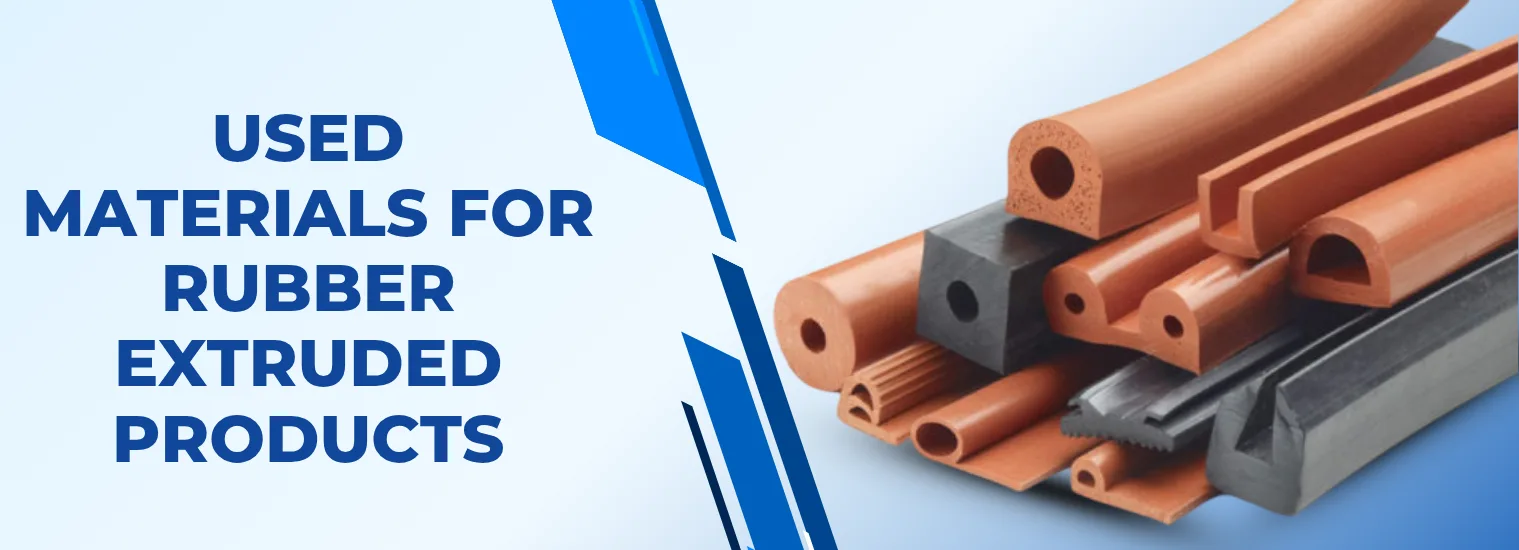
Used Materials for Rubber Extruded Products – A Complete Resource Guide
Rubber extrusion is widely used to manufacture profiles, seals, gaskets, tubes, cords, and many other customized shapes that we see in industrial, automotive, construction, electrical, and consumer applications. The choice of material is one of the most important decisions in any rubber extrusion project. The right rubber compound ensures performance, durability, and cost-effectiveness, while the wrong one can lead to failure, leakage, cracking, or premature wear. This resource content briefs the frequently used materials for rubber extruded products, the properties of those materials, their specific applications and the key points you need to consider when selecting the material that meets your needs.
1.EPDM / Sponge Rubber: One of the main choices in the production of rubber products is EPDM, which is mainly used for outdoor and weather-exposed applications, and is therefore suitable for a long lifespan.
Common Applications:
- Door and window seals
- Automotive weatherstrips
- Roof and panel gaskets
- HVAC seals and profiles
1. Natural Rubber (NR): Natural rubber has the high elasticity, excellent mechanical strength, and good dynamic properties. This material is derived from latex, and is mainly used in places where flexibility and elastic properties are extremely important.
Common Applications:
- Vibration dampers
- Shock-absorbing profiles
- General-purpose extruded strips
- Some industrial and agricultural applications
3. Nitrile Rubber (NBR): When looking for oil- and fuel-resistant material, nitrile rubber is the one. Non-exhaustive industrial and automotive applications are the main areas of its usage, where there is the threat of a petroleum-based fluid contact.
Common Applications:
- Fuel and oil hoses
- Oil seals and gaskets
- Industrial extruded profiles
- Automotive engine components
4. Neoprene: Neoprene is an all-around synthetic rubber. It has a good balance of properties such as mechanical strength, weather resistance and moderate resistance to oil, making it highly useful in many applications.
Common Applications:
- Industrial door and window seals
- Marine and outdoor gaskets
- HVAC and refrigeration seals
- General-purpose industrial extrusions
5. Silicone Rubber: One of the main features of silicone rubber is its ability to perform at both very high and very low temperatures, which makes it a popular choice in food, medical, electrical, and high-temperature applications.
Common Applications:
- Food-grade tubes and profiles
- Oven door seals, high-temperature gaskets
- Medical and pharmaceutical tubing
- Electrical insulation profiles
5.Silicone Rubber: One of the main features of silicone rubber is its ability to perform at both very high and very low temperatures, which makes it a popular choice in food, medical, electrical, and high-temperature applications.
Common Applications:
- Food-grade tubes and profiles
- Oven door seals, high-temperature gaskets
- Medical and pharmaceutical tubing
- Electrical insulation profiles
6. SBR (Styrene Butadiene Rubber): SBR is an economical synthetic rubber that can be used in a variety of applications, such as extruded profiles. It is also useful for strips, pads, and gaskets because of its high wear resistance.
Common Applications:
- General-purpose strips and profiles
- Conveyor components
- Low-cost sealing applications (non-oil contact)
7. Viton / FKM (Fluoroelastomer): Viton (FKM) is a top fluorocarbon elastomer with great resistance to very high temperatures, corrosive chemicalsIt is one of the most common choices for critical sealing in the automotive industry, chemical processing, and oil and gas sectors.
Common Applications:
- High-temperature seals and gaskets
- Chemical processing equipment profiles
- Automotive and aerospace fuel system parts
8.TPE / TPV (Thermoplastic Elastomers): Both TPE and TPV are flexible rubber like materials that are processed like plastics for extrusion and injection molding. They are used to make soft-touch grips, automotive seals and appliance gaskets.
Common Applications:
- Automotive sealing profiles
- Consumer products and handles
- Flexible covers and protective edges
9.Butyl Rubber (IIR): Butyl rubber is characterized by very good impermeability to gases and air, and also has good chemical and weather resistance. It is used in applications such as inner tubes, airtight seals, linings and extruded profiles with low gas permeability.
Common Applications:
- Air retention seals
- Chemical tank linings
- Vacuum system gaskets
- Gas barrier profiles
10.PVC-Nitrile Blends: PVC-NBR blends have both the flexibility of nitrile and the strength and flame resistance of PVC. Thus, they are used in the production of motor vehicle hoses, cable jacking, and insulation profiles that require oil resistance and good mechanical properties.
Common Applications:
- Fuel transfer hoses
- Industrial air hoses
- Flexible fuel lines
- Refrigeration insulation tubes

Why Choose Custom Rubber Extrusion?
At Custom Rubber Extrusion, we are driven by core values that guide our business and define our commitment to our clients.

Expertise and Experience - With years of experience in the Extrusions industries, we have the expertise to deliver custom-designed solutions that meet the most demanding requirements.
High-Quality Products - Our ExtrusionsExtrusions are made from high-quality materials, ensuring durability, clarity, and long-lasting performance.
Custom Solutions - We specialize in providing tailored Extrusions solutions that meet the unique needs of our clients.
Exceptional Customer Service - We provide end-to-end support, from initial consultation to post-delivery assistance, ensuring our clients are delighted with the results.

How to Choose the Right Material for Your Rubber Extrusion
While deciding on a material for rubber extruded products you should always take into account:
- Temperature range: The absolute minimum and maximum temperatures at which the profile will operate.
- Chemical exposure: If the product will come into contact with any oil, fuel, solvent or cleaning agent.
- Outdoor environment: Environmental factors like UV, ozone, moisture, and weather.
- Mechanical load: The levels of compression, stretching, abrasion, and vibration.
- Regulatory needs: Food-grade, medical-grade or certain industry standards and regulations.
Conclusion
If you understand these materials and select the appropriate material based on the usage requirements and application, you will be able to obtain rubber extruded products that are long-lasting, reliable, and economical. Furthermore, as a result of collaborating with an experienced extruded product manufacturer, you gain additional advantages in terms of material selection, superior design and consistent quality of each batch.