Types of Rubber Materials for Extrusion
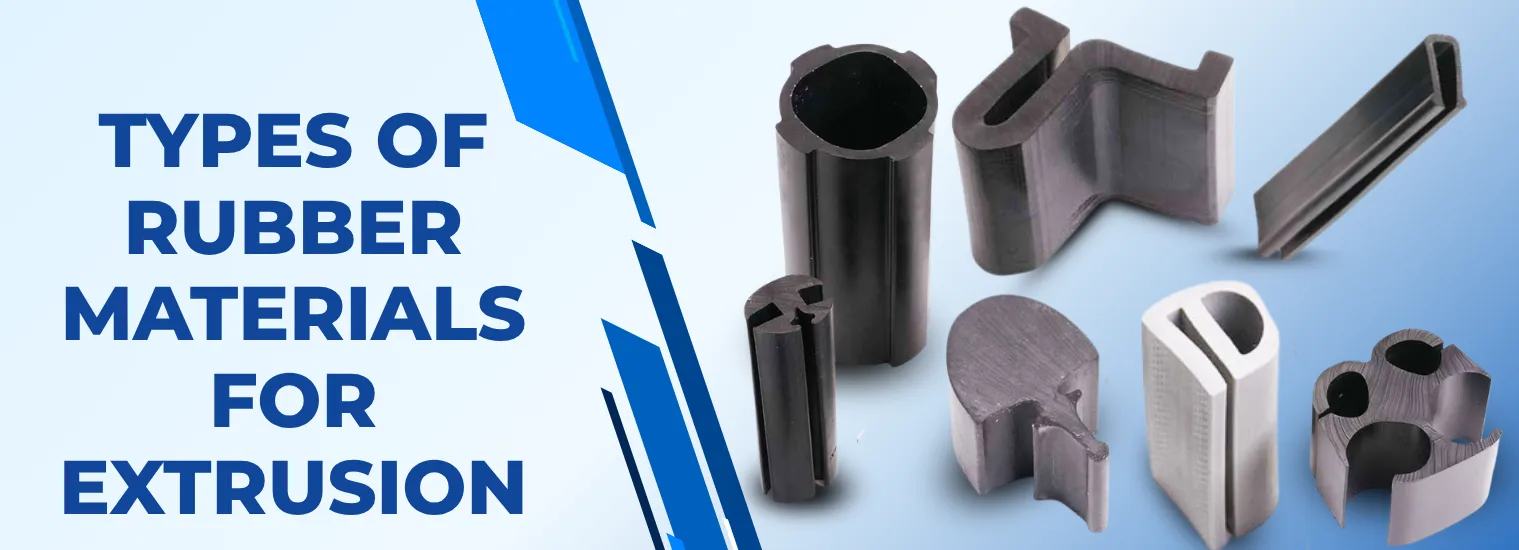
Selecting the right rubber material is definitely a key decision when you are planning any custom rubber extrusion. Different rubber types differ in their characteristics such as flexibility, strength, temperature resistance, chemical resistance, and even price. Mainly, if the material is chosen incorrectly, the profile that has been extruded can become cracked, swollen, hardened, or generally deteriorate to the point of a premature failure in the actual working conditions. What follows is a resource-style guide that features the main kinds of rubber materials used for extrusion with their properties, applications, limitations, and the basic selection tips. With this, you will be able to communicate more effectively with your rubber extrusion supplier and, at the same time, pick the most appropriate compound for your ?project.
1. Natural Rubber (NR)
Natural Rubber is a product of the latex from rubber trees. It is generally the oldest and one of the most common of the radically different types of elastomers because it combines the properties of great elasticity, resilience, and high tensile strength.
Typical Extrusion Applications:
- Vibration mounts and anti-vibration profiles
- Shock-absorbing strips and buffers
- Conveyor belts and hoses
- Indoor sealing profiles
2. EPDM Rubber (EPDM)
EPDM (Ethylene Propylene Diene Monomer) is a popular choice of material for extruded rubber profiles, mostly for outside applications. This is a very stable material, and therefore, it resists weather and ozone very well.
Typical Extrusion Applications:
- Door and window seals
- Automotive door, trunk, and window seals
- Weatherstrips for enclosures, cabinets, and panels
- Roof sealing profiles, glazing gaskets, HVAC seals
3.NBR / Nitrile Rubber (NBR, Buna-N)
Nitrile Rubber is the highly used material for oil-resistant extruded parts. Along with oil resistance, it also provides a wide range of good mechanical properties.
Typical Extrusion Applications:
- Fuel and oil-resistant sealing profiles
- Hoses and tubes for oil and fuel transfer
- Gaskets and O-ring cords for hydraulic and pneumatic systems
- Seals for industrial machinery
4. Neoprene Rubber (CR)
Neoprene (Chloroprene Rubber) is a flexible material that is typically used when both moderate oil resistance and good weather resistance are necessary. In numerous aspects, it is a median of EPDM and NBR.
Typical Extrusion Applications:
- Industrial gaskets and sealing profiles
- Dock bumpers and profiles for marine applications
- Cable jackets and protective covers
- HVAC seals and door gaskets
5. Silicone Rubber (VMQ)
Silicone Rubber is the material of choice when a component has to resist high temperatures and can remain flexible at low temperatures, often with the additional requirement of food-grade or medical-grade.
Typical Extrusion Applications:
- Seals, tubes, and gaskets for food and medical applications
- High-temperature oven door seals and gaskets
- Automotive and aerospace sealing profiles
- Outdoor lighting seals, gaskets, and waterproof profiles
6. Fluoroelastomer (FKM / Viton)
Fluoroelastomers are the most durable rubbers, which find use in very harsh environments, particularly where high temperatures and aggressive chemicals coexist.
Typical Extrusion Applications:
- Seals and profiles in chemical processing plants
- Fuel system seals in automotive and aerospace applications
- High-temperature gasket cords and O-ring cords
- Seals for chemical, oil, or solvent environments
7. SBR Rubber (Styrene-Butadiene Rubber)
SBR is a broadly used synthetic rubber that is acknowledged for its admirable wear resistance, flexibility, and affordability. Its behavior is nearly similar to that of natural rubber; however, it has better heat and aging resistance.
Typical Extrusion Applications:
- Conveyor belts and impact bumpers
- Mild-condition sealing and cushioning
- Affordable wear-resistant rubber products
- General-purpose industrial strips & profiles
8. Butyl Rubber (IIR)
Butyl rubber has excellent air retention and very low gas permeability. Moreover, it can also provide strong resistance to chemicals, which is why it is the most suitable sealing solution for chemical-based applications.
Typical Extrusion Applications:
- Air-tight sealing & vacuum profiles
- Chemical tank & pipeline gaskets
- Vibration isolation rubber strips
- Gas barrier sealing applications
9. TPE / TPV (Thermoplastic Elastomers)
TPE and TPV are flexible, rubber-like materials that can be processed using plastic methods, providing easier molding, faster cycle times, and recyclability. These are widely used in the production of automotive and consumer extruded products.
Typical Extrusion Applications:
- Automotive window & door seals
- Soft-touch grips and protective covers
- Flexible strips for consumer products
- Recyclable thermoplastic rubber extrusions

Why Choose Custom Rubber Extrusion?
At Custom Rubber Extrusion, we are driven by core values that guide our business and define our commitment to our clients.

Expertise and Experience - With years of experience in the Extrusions industries, we have the expertise to deliver custom-designed solutions that meet the most demanding requirements.
High-Quality Products - Our ExtrusionsExtrusions are made from high-quality materials, ensuring durability, clarity, and long-lasting performance.
Custom Solutions - We specialize in providing tailored Extrusions solutions that meet the unique needs of our clients.
Exceptional Customer Service - We provide end-to-end support, from initial consultation to post-delivery assistance, ensuring our clients are delighted with the results.

Conclusion
It is very important to choose the appropriate rubber material for extrusion in order to get a good performance and long service life. If you comprehend the conditions of the environment, determine the resistance to chemicals and temperature, take into account the mechanical requirements, and confirm through testing to ensure the performance of your product. Choosing the right material with the necessary information is a great way to increase the product quality and, at the same time, decrease maintenance, failures, and production difficulties, thus making it easier to reach project goals.