Standard vs. Custom Bellows: How to Choose What Your Machine Actually Needs
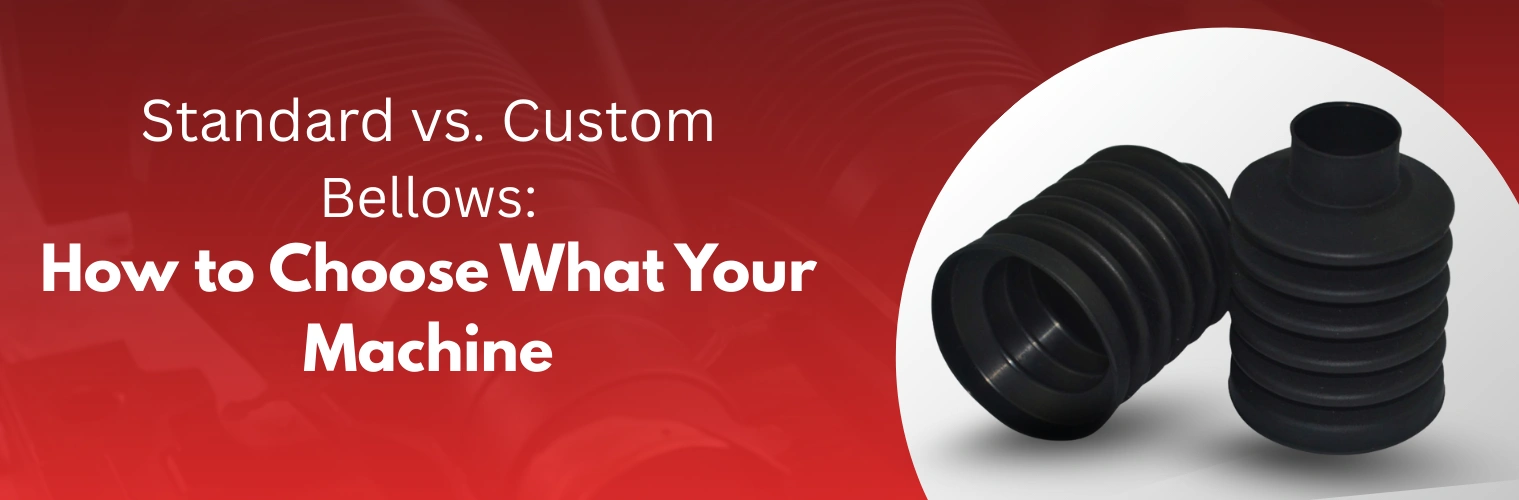
When it comes to keeping machinery safe and running smoothly, custom rubber bellows play a crucial role. These parts are specifically designed to seal and protect components, absorbing vibration and movement between different parts of a machine. But, when businesses are looking to source them, the first thing they want to know is: how much do custom rubber bellows actually cost?
How much custom rubber bellows parts will cost depends on quite a few different things, both technical and otherwise. These include the material you choose, how complex the design is, the size of the parts, how many you need, and what kind of tooling is required. Getting a handle on these factors helps businesses make smart purchasing choices that keep costs down without sacrificing quality or how well the parts perform.
1.Factors Affecting Custom Rubber Bellows Parts Cost
- Material Selection The type of rubber you choose will influence the cost. Various elastomers come with their own distinct mechanical, chemical, and temperature-resistant traits.
- EPDM Rubber: An affordable choice that withstands weather and ozone exposure exceptionally well.
- Silicone Rubber: It's costly, but suitable for the food and medical industry, as silicone can resist a range of temperatures, from -60°C to +230°C.
- Neoprene Rubber: Moderate pricing and can stand up well to oils and chemicals.
- Natural Rubber (NR): Expensive, but it delivers top-notch resistance to heat and chemicals.
- Nitrile (NBR): An affordable option that's great for resisting oils and fuels.
- Design Complexity A simple bellow design with uniform folds and standard dimensions will cost less than a complex one with multiple diameters, special ends, or intricate profiles. Bellows can come in different shapes, like conical, cylindrical, square, or multi-section ones. If the bellows needs features like integrated flanges, multiple convolutions, or varying wall thickness, the tooling design and machining process become more complex, increasing overall cost.
- Size and Dimensions The size of the rubber bellows really impacts raw material and curing time. Bigger bellows need more material, which obviously drives up the cost. On the other hand, really small ones require exact tooling and strict quality checks, which can also make production more expensive. That's why manufacturers often refine the wall thickness and fold depth for optimal performance while keeping costs down.
- Tooling and Mold Development Tooling is a cost you pay upfront, but it really shapes the entire project budget. To make custom rubber bellows, special molds are required for shaping and curing them. The cost of these molds, or tooling, can vary based on design complexity and the different production methods you choose, like compression, transfer, or injection molding.
- Quality Standards and Testing Meeting the specific quality standards of an industry drives up the overall production costs, but it guarantees that the product will perform reliably. Tests such as pressure endurance, flex fatigue, and temperature cycling might also slightly increase costs, but these are crucial for ensuring safety and durability.
- Post-Processing and Finishing Adding these extra steps can definitely increase the total cost, especially for more complex processes. For instance, some bellows need additional work after they've been molded, like: Trimming or removing excess material (deflashing) Applying a coating or some other surface treatment Assembling or bonding them with metal components
2. How to Reduce the Cost of Custom Rubber Bellows
We take a close look at every project to suggest the most affordable materials, design, and production methods. If you're looking to lower your overall bellows expenses while still keeping performance up to par, here are some useful strategies:
- Material Optimization: Pick the right material, but don't overspend. Stick to high-cost materials only when they're really needed.
- Design for Manufacturability: Simplify your design, reduce unnecessary convolutions or custom ends to minimize tooling complexity.
- Volume Planning: Order in larger quantities to bring down the cost for each item.
- Reusable Tooling: It's smart to invest in modular tooling that can be adjusted for different bellows sizes or shapes.
- Local Manufacturing: Work with manufacturers who have plenty of experience, as they can modify your design to be more cost-effective.

Why Choose Custom Rubber Bellows?
At Custom Rubber Bellows, we are driven by core values that guide our business and define our commitment to our clients.

Expertise and Experience - With years of experience in the Bellows industries, we have the expertise to deliver custom-designed solutions that meet the most demanding requirements.
High-Quality Products - Our Bellows are made from high-quality materials, ensuring durability, clarity, and long-lasting performance.
Custom Solutions - We specialize in providing tailored Bellows solutions that meet the unique needs of our clients.
Exceptional Customer Service - We provide end-to-end support, from initial consultation to post-delivery assistance, ensuring our clients are delighted with the results.

The cost of custom rubber bellows parts depends on a number of things, including materials, mold design, tooling, and the quality requirements. When you collaborate with an experienced manufacturer, you can get high-quality custom rubber bellows precisely tailored to your unique requirements. At Custom Rubber Bellows, we're experts at designing and manufacturing custom rubber bellows that perfectly match your specific application, all while keeping costs down. If you're looking for just a few prototypes or need a large-scale production run, we are ready to help you find the perfect balance between performance, quality, and cost.